
Mastering the Art of Drawing: A Comprehensive Guide for Aspiring Artists in 2025
Introduction to Drawing
Drawing, at its core, is the art of making marks on a surface, transforming a blank canvas into a visual narrative. Whether you dream of sketching lifelike portraits, crafting imaginative landscapes, or illustrating intricate designs, understanding the fundamental principles of drawing is your essential first step. In 2025, the accessibility of online resources and artistic communities makes it easier than ever to embark on this creative journey. This guide will provide a comprehensive overview of how to draw, from basic techniques to advanced concepts, empowering you to develop your skills and express your unique artistic vision.
Essential Drawing Tools and Materials
Before you begin, it's crucial to equip yourself with the right tools. While you can technically draw with almost anything, certain materials are optimized for the practice and will significantly enhance your learning experience. Here are some essentials:
- Pencils: A range of graphite pencils is fundamental. Start with HB for general sketching, a 2B or 4B for darker tones and shading, and an H or 2H for lighter lines and details.
- Paper: Drawing paper is designed to hold graphite and charcoal effectively. Opt for sketchbooks with varying paper weights and textures. Smooth paper is ideal for detailed work, while textured paper can add interesting effects.
- Erasers: A kneaded eraser is versatile for lifting graphite and creating highlights. A standard rubber eraser is good for more precise corrections.
- Sharpeners: Keep your pencils sharp for clean lines and controlled shading.
- Optional but Recommended: A blending stump or tortillon for smooth tonal transitions, a ruler for straight lines, and a drawing board for stability.
Understanding Basic Drawing Principles
Effective drawing relies on a solid understanding of fundamental principles. Mastering these will lay a strong foundation for all your future artistic endeavors.
Line: The Building Block of Art
Lines are the most basic element of drawing. They can be thick, thin, straight, curved, jagged, or smooth. Experimenting with different types of lines helps you convey form, movement, and emotion. Practice drawing various types of lines to develop control and fluidity in your hand.
Shape and Form: Giving Objects Dimension
Shapes are two-dimensional areas, while forms are three-dimensional objects. Recognizing basic shapes (circles, squares, triangles) within complex objects is a key skill. Understanding how light interacts with these forms to create highlights, mid-tones, and shadows is crucial for rendering them realistically.
Value: The Play of Light and Shadow
Value refers to the lightness or darkness of a tone or color. Creating a full range of values, from the darkest darks to the brightest lights, gives your drawings depth and volume. This is achieved through shading techniques.
Texture: The Surface Quality
Texture describes the surface quality of an object. You can imply texture through the use of lines, dots, and shading patterns. For example, short, choppy lines can suggest rough wood, while smooth, blended tones might represent polished metal.
Fundamental Drawing Techniques
Once you grasp the basic principles, you can start applying various techniques to bring your drawings to life.
Scribbling and Hatching
Scribbling involves using random, circular marks to build up tone. It's a freehand approach that can be effective for quickly establishing shadows. Hatching uses parallel lines to create tonal values. The closer the lines, the darker the tone. Cross-hatching involves layering lines in different directions to build up darker values and create a sense of form.
Stippling
Stippling uses a series of dots to create tone and texture. The density of the dots determines the darkness of the area. This technique can produce very subtle gradations and is excellent for rendering soft textures.
Blending
Blending involves smoothing out tonal areas to create seamless transitions between light and shadow. This can be done with a blending stump, tortillon, your finger, or even a soft cloth. Careful blending is key to achieving a realistic, three-dimensional look.
Drawing from Observation
One of the most effective ways to improve your drawing skills is to draw from life. This involves carefully observing your subject and translating what you see onto paper. Start with simple objects like fruit, a mug, or a book.
Key Steps for Observational Drawing:
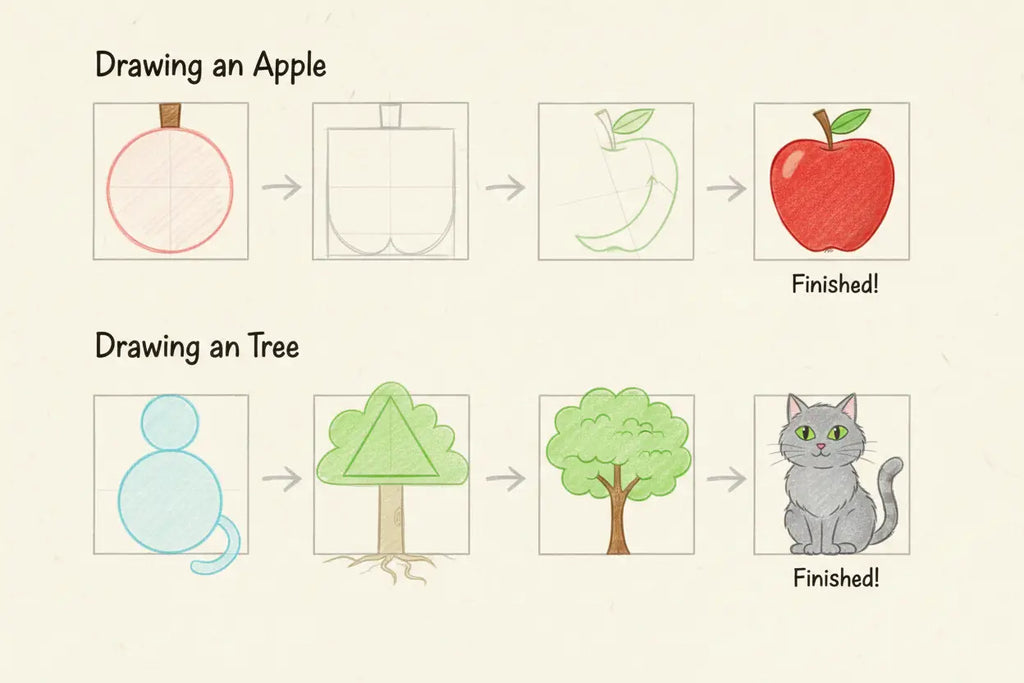
- See the Big Picture: Begin by sketching the overall shape and proportions of your subject. Don't get bogged down in details too early.
- Block in Major Shapes: Use simple geometric forms to represent the main masses of your subject.
- Establish Light and Shadow: Identify the light source and map out the areas of highlight and shadow.
- Refine and Detail: Gradually add finer details, textures, and subtle tonal variations.
- Check Proportions: Constantly compare different parts of your drawing to ensure accuracy.
Drawing from Reference and Imagination
While drawing from observation is paramount, drawing from reference photos and from imagination are also valuable skills. Reference photos can provide clarity on details and lighting that might be difficult to capture from life. Drawing from imagination allows for boundless creativity, but it's best developed by having a strong foundation in observational drawing, as this builds your visual library.
Practice and Patience: The Keys to Progress
Like any skill, drawing requires consistent practice and a good dose of patience. Don't be discouraged by early results. Every drawing you create is a learning opportunity. Set aside regular time for drawing, even if it's just 15-30 minutes a day. Experiment with different subjects, styles, and techniques. Join online communities, share your work, and seek constructive feedback. The artistic journey is a marathon, not a sprint, and with dedication, you will undoubtedly see significant progress in 2025 and beyond.
Conclusion
Drawing is a rewarding and accessible art form that can bring immense joy and fulfillment. By understanding the fundamental principles, mastering essential techniques, and committing to regular practice, you can unlock your artistic potential. Embrace the process, enjoy the journey, and start creating today!